Monday, July 27, 2020

Call a meeting with 25 year-old me!

I'm seeing more and more people writing/talking about this sort of thing. Now that I'm about to be 55 (WHAT!?!) years old, what would I go back and tell 25 year old me?

So, so much.

But where it concerns worship and Christian living, I think these seven would top the list:

1) Find a mentor. No.. find 6 mentors. And do it now. Meet with them every month or two. Walk into those conversations prepared, with a list of at least 3-5 open-ended questions. Also have handy any frustrations, tensions, or struggles you're having. And then ask your questions. Use as few words as possible. And then listen. Take notes. These guys don't have to be spiritual giants, but they do need to be ahead of you on the journey. Every year, compile your notes and review them annually. By the time you've done this 25 times you will have a PhD in practical living and ministry! (And potentially one whale of a book project.)

2) Get a journaling Bible and write in it. Daily. Don't just read the Bible, interact with it. Imagine yourself in the stories... in God's story. If it is a parable, identify which character you are. Write until the journaling space is full and then get another Bible and do it again. Your goal is not to get into the Bible, but to get the Bible into you. 

3) Shape your ministry by helping everyone else fulfill their God-dreams. If someone dreams of being a great worship leader, do all you can to help. If they want to be a Hollywood film-maker, give them lots of opportunities to make films for the church. If they "only" want to be a faithful choir member, that's okay. Don't make others into your image, help them live into the image of Christ on them.

4) Lead from a place of love and acceptance, not for the love and acceptance of others. (Thanks, Louie Giglio!) Seriously. If you aren't feeling loved and accepted, spend more time with God. If you have a sense of being 100% loved and accepted by your Heavenly Father, you will crave SO MUCH LESS the affirmation of those around you. Invite someone else into this tension so they can help you monitor it.

5) Make friends. Leadership is lonely, and perhaps leadership in the church is loneliest of all. Don't feel sorry for yourself about that, just find a way to make friends. Other guys are looking for friends too, but they're too afraid, too busy, or too distracted to go first. So ask a guy around your age to grab lunch. If it's easy to talk with them, do it again. And again. You will need people you can talk with about stuff at home and at church who don't have a "dog in that fight."

6) Love your wife more than anything or anyone except God. There's no Christmas pageant, Easter musical, Night of Worship, or choir retreat that's worth putting her aside. After salvation, she is God's greatest gift to you. Treat her like a Princess of the Most High God. Because she is. And when you do, your prayer life will be so much more powerful! (1 Peter 3:7) 

7) Oh yeah... your prayer life. It is your fuel line. If the tank is full and the engine is powerful, that's great. It's also useless unless gasoline can get to the engine. Pray like your marriage, your ministry, and your life depend on it. Because they do.

Gosh, y'all. I really want to go find the me of 30 years ago and give him this letter. What would you tell him? Better yet, what would you tell your young self?

Monday, July 20, 2020

Worship Learnings from East Africa

About this time 11 years ago I was returning from a trip to Tanzania. If you're like me, that isn't very easy to place on a map. Tanzania is a very large swath of land situated on the eastern coast of Africa, south of Kenya and north of Mozambique.

Swahili was the common language, though many people were multi-lingual. (Yes, multi. Swahili, English, French, and often a tribal dialect as well!)

The capital city, Dar es Salaam, was a study in third-world economic diversity. The vast majority were poorer than anything I'd ever seen. Cardboard huts so close together that a car--which no one could afford--wouldn't have fit down the "street." The smells were rancid. I think I described it to my sweet wife as a combination of burning trash and human waste. Yet not far away were neighborhoods with homes as nice as many in the nicer neighborhoods of my town, Bowling Green, Kentucky. Even the smell was faint there.

I traveled with my buddy, Steve Gray. We were both worship pastors, but were going to offer training to pastors. It was an amazing trip. ("Amazing" was the favorite word of our fantastic host, Moses Mboya.)

I saw beauty I'd never imagined, especially in creation and in the faces of children. I also sensed the presence and work of the Holy Spirit in ways I didn't know were possible. I am so grateful for my time there!

There were some uniqueness about the worship of locals that I found interesting enough to think you might enjoy them too. Here are my top 5:

5) Women were usually the ones "running the show." Don't let that language get in the way. While these women were definitely running things, they did more than emcee. They were spiritual authorities, and they wore that responsibility with grace and confidence. Reminds me of Jesus, who came "full of grace and truth." (John 1:14)

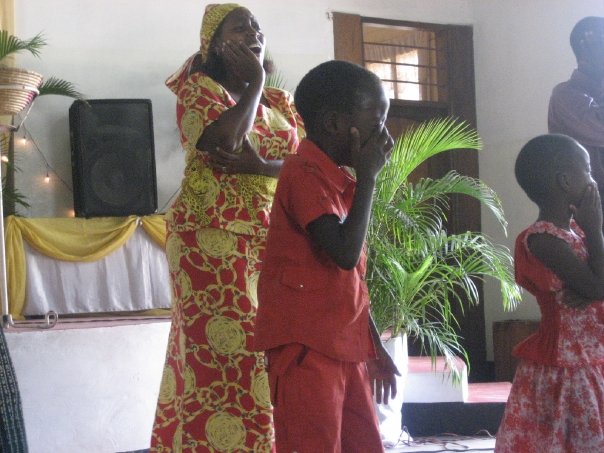
4) Children were very active in the services. They sang. They danced. They acted out Bible stories. They were always thoroughly prepared and fully engaged. Below is a picture of a little girl (maybe 8?) who was weeping as part of her character in the play-song being brought to life for us. Her tears flowed generously. There was nothing merely "cute" about the role of these youngsters. They were empowered storytellers.


3) The simple buildings were adorned with beauty. Again, even in this third-world culture, the church found ways to make the worship space beautiful. Vibrant. Sacred.

2) Singing was vigorous. I can't find a better word. They sang hard. They worshiped hard. Whether it was "How Great Thou Art" (maybe Swahili was the original language for that song... not really, but they sang it like it was!) or a song I couldn't understand and had never heard--more tribal and drum-accompanied--their singing was not obligatory or contrived. It was gut deep. Soul deep.

1) Note taking was very different. In the U.S. we tend to jot down an insightful, pithy comment the preacher makes. In Tanzania, the only thing they wrote down was scripture. It's like they were listening to us ramble until we said something God said; that's what they'd want to remember. Seems wise.

I'm concerned that U.S. culture has made much of what I described nearly impossible. So now I'm curious, what do you wish we would learn from the believers in other countries, anything?

I miss the friends I made in those 16 days. Even more, I miss the freedom the Holy Spirit had to move, to act, and to lead. Maranatha.

Monday, July 13, 2020

Unrepentant Sin

Sin is a tricky subject for any believer.

Don't agree? Then you read 1 John 3 and tell me how it works.

Just 2 verses are enough to make any of us with hair left pull it out!

"But when people keep on sinning, it shows that they belong to the devil..."

Wait. What? Yep. That's verse 8.

I wish verse 9 helped, but it doesn't: "Those who have been born into god's family... can't keep on sinning, because they are children of God."

For the worship leader, these implications are magnified. And I'm not sure about your church, but everyone on our platform keeps on sinning. Perhaps me most of all.

So how do we lead worship for the Bride of Christ in the presence of a holy God?

I can only come up with one answer.

Repent into the righteous covering of Christ.

[Repentance is more than sorrow, not less. More than confession, not less. Repentance is to change the way we think so we change the way we behave. This only happens by the kindness of our loving-Father.]

When someone comes and says, "Why are you letting so-and-so be part of the team?" (which is a valid, even if judgy question) I respond with, I'm just glad I get to be part of the team.

None of us is worthy. Not one.

But God.

Yes, but God! In His outrageously generous grace, God covers us with the righteousness (right-ness) of Christ. Hallelujah!

"For God made Christ, who never sinned, to be the offering for our sin, so that we could be made right with God through Christ." (2 Col 5:21)

But we.

Yes, but we. There is still a responsibility we have. It is simple. It is hard. It is private. It is sensitive.

We repent. Not just the first time, when we become followers of Jesus and are covered with his righteousness. (HALLELUJAH!) But we continually repent.

We become aware of our sin. We confess it to God. We confess it to someone else, perhaps our worship pastor, or pastor, or counselor, or the person we wronged. And then we ask God to help us change the way we think so we can change the way we behave.

And so when the person pushes back to my initial response above, I share the phrase that has helped me navigate this phrase: "The only thing that disqualifies us (yes, me too) from serving in worship is unrepentant sin."

Indeed, I think this is what John the Beloved was writing about in 1 John 3. Repentant sinners crave holiness. Unrepentant ones crave their own way.

So how about you? How do you handle this? And do you have words of correction or clarification for me? I'd be delighted to read them in the comments!

Monday, July 6, 2020

Relational Rehearsing and M*A*S*H?

I was talking with a good friend this morning, a young worship leader. I told him about leaving my first full-time church job--being asked to leave, that is--because I was stream rolling people rather than listening and valuing.

While I still see the young Rod poke out on occasion even now, my general disposition in ministry has changed dramatically. (So yes, there's hope!)

One of the ways I've learned to lead more relationally is specifically connected to rehearsals. Here are three that have been very helpful:

1) Invite suggestions. Rather than walking in with a fixed vision for a song, a service, or a ministry, I try to start with a really good idea and then hold it loosely. When someone says, "what if we all sing there?" or "what if the drums wait and come in here?" and I listen, perhaps try it, and then--if it is mostly as good as what I envisioned in my head--I choose their idea... well you know already, don't you? They feel heard, valued, and appreciated. You would too. I do too!

2) Say things the way they hear them. I've had to learn to be multi-lingual. Not so much Spanish, or French, or Swahili. But I try to speak in the language each person in the room can resonate with. For the music readers: measure numbers and other markings in the music. For by ear musicians: 2nd chorus or turnaround or bridge. For choir members who don't read music: I use word pictures. For the analytic among us, I use numbers (10% louder) etc.

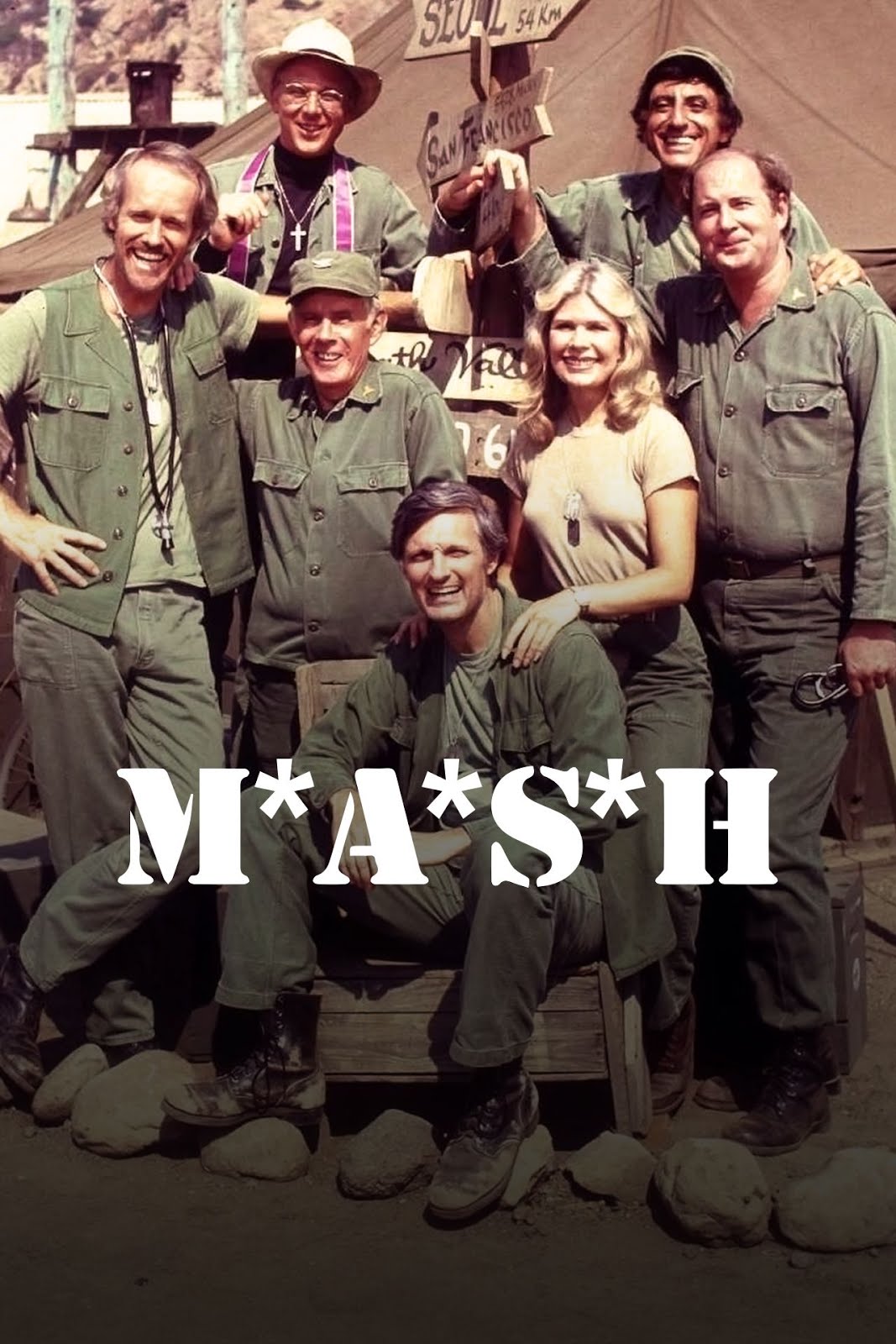
2a) Say things the way they say things. I sometimes talk like I'm from the city... maybe a university town. I don't try to; it just comes out. But I need to learn to speak the language of the people I serve in more rural setting. So I try to listen to their words. Their phrases. The way they express themselves is the way they can best hear. So I try to sound like the best version of themselves when I talk. I wouldn't say I'm great at this, by the way. But the longer I try, the better I get. It's sort of the difference, for those of you M*A*S*H fans, between Hawkeye and Winchester.

3) Balance clear direction with flexible responsiveness. We walk into rehearsals with a thoughtful, clear plan. I use song maps for the worship songs. I put a rehearsal schedule on the whiteboard for the choir. There is clear structure and direction. But seldom does the rehearsal end with the vision unaffected. I suppose you could say we structure the flow, spur on the flow, and go with the flow.

And the flow is the people, not the music. That's what makes the rehearsal, well, relational.

I'd love to hear from you! How do you enhance relationships in rehearsals?

Monday, June 22, 2020

(I wanna) Be Like Daryl

When I was 12, a family moved in a few houses away. I met Michelle first. She was my first big-time crush. I walked away from our first conversation across that chain-link fence convinced I was in love and going to marry her. (Oh, the whims of a 12 year old boy!)

Gradually I came to know Michelle's family. Her dad was in ministry. They joined our church. Her older brother, Mike, became my best friend, and was the best man in my wedding. There weren't many days between the fall of '78 and '83 that I wasn't at their house or they were at mine.

The mom and dad (Peggy and Wally) became my "other parents." Daryl, Yvonne, Mike and Michelle were my other siblings. I'm sure my memories are a bit idyllic, but honestly? Not much. They were, as Michelle said recently "our family, and we were theirs."

Daryl became best friends with my oldest brother, Rusty. When I was a senior in high school, they became interim youth co-pastors at our church. They were both involved in the music ministry. They sang in the Easter musical, playing the roles of Jesus (Daryl) and Peter (Rusty) in Joy Comes in the Morning. There's a scene near the end of that epic 80s cantata where the resurrected Jesus and ashamed Peter lock eyes and are reunited with a giant hug. I'll never forget seeing them become the characters and give all of us hope that we, too, can be fully reconciled with Jesus. Even after our sin.

As I wrote in a Facebook post yesterday, I learned what friendship could be watching my brother and his best friend. I imagine the epic Biblical friendship between David and Jonathan was a foreshadowing of their relationship.

Daryl was taking out the trash a few days ago, had a heart-attack, and died suddenly. He was 64.

It has called to my memory a bunch of things that might encourage us all toward Christ-likeness. You see, Daryl didn't just play Jesus in a play at church, he modeled (imperfectly, of course) our Savior in the every daily-ness of his life.

Daryl knew I needed help with how to talk to girls, how to say things kindly, and and how to be okay with myself. Daryl was probably the first person who could correct me in a way that made me want to be corrected. When I was feeling like I was a loser, he would speak hope into my soul. And when I didn't see any way out of a hard spot, he gave me perspective. I know now he was teaching me against binary thinking, to look for a third option.

In other words, Daryl was generous with encouragement and hope. He spoke wise correction into the life of this (temporarily) fatherless teenager. And he helped me see the big picture when I was lost in the weeds. I really want to be like Daryl.

Finally, Daryl was a song writer. In fact, he wrote a song our youth group fell in love with called "Ribbons and Bows." When I did my first recording project in a basement in Cincinnati Ohio, I asked him if I could include that song. Not only did he say yes, he played guitar for the cassette recording. (Man, I'm old!) But he didn't just play. He taught me how to behave in a setting that was new to me.

He did what he always did. He helped me think, feel, and act like Jesus.

In the ways Daryl was so generous with others, I wonder if Jesus may be calling you and me to be more that way.

For my songwriting friends, here's a bit of Daryl's much loved song, inspired by his ministry with teenage girls, about his future daughter(s):

Ribbons and bows, diapers and dolls,
That's my baby girl.
She's my whole world.
Growin' up fast,
This childhood won't last.
Who'll watch over her
When she's not my baby girl?

Will I love her enough to show her
That he cried for her,
Even died for her?
When the pain of life
Gets too tough for her
He'll comfort her, 
Oh the comforter.

High school prom queen,
T-shirt and blue jeans.
We shared some tears
Through those teenage years.
Kids of her own, my how time has flown.
She's a woman now;
She survived somehow.

'Cause I loved her enough to show her
That he cried for her,
Even died for her.
And she can share 
That Truth with her own son;
She can share the love
Of the Perfect One.

Monday, June 15, 2020

Do it Anyway!

I live with the fallacy that I should only do things where I excel. In fact, I'd say I'm the poster-boy for this! If I can't figure it out in 15 minutes, I give up. But if it comes easily, I'll stay at it forever!

This is not good for me. Not for my development anyway.

And I dare say, it may not be good for you either. (Forgive me for being so blunt?)

Where is all of this coming from, and what it has to do with worship, with Christian living?

Oh, I am SO glad you asked!

I was thinking about the people who tell me they don't sing in worship because they aren't good singers. And then I got to thinking about whether or not they would use that rationale with other parts of the gathering.

I'm not good at giving, so I'm just going to keep my tithe.
I'm not good at praying, so I'll just sit quietly.
I'm not good at listening, so I'll just play a game on my phone during the sermon.

I can't imagine those excuses would be nearly as embraced by our church-goers as, "I'm not good at singing, so I just listen."

After all, we are commanded in scripture to give, to pray, to listen, but none of those as often as to sing!

Friend, we need your voice. We need you. So if you aren't good at singing, sing anyway!

Come, let us sing for joy to the Lord;
    let us shout aloud to the Rock of our salvation.
Let us come before him with thanksgiving
    and extol him with music and song.
        --Psalm 95:1-2

Tuesday, June 9, 2020

But Do They BELIEVE You Love Them?

I find emotions a fascinating part of being human.
  • The love of an infant for her mother.
  • The delight of a toddler with his grandfather.
  • The infatuation of a teenager for her classmate.
  • The young love of newlyweds.
  • The sense of uncertainty when marriage struggles.
  • The deeper-than-friendship devotion of those married half a century.
Some of those feelings, I'm sure you can remember; the others you can imagine. But very few of them can you see.

And that's just one of the things that interests me about emotion. It can be forest-fire-hot on the inside, and frosty-ice-cold on the outside. At the same time.

+ + + + +

I love the folks in my ministry. I really do. I hurt when they hurt. I dance on the inside when they get good news. Joy resonates in my heart when a major life event goes well--salvation, marriage, first child, and more.

But I've learned something powerful. What I feel does nothing for them. What they see, what they receive, does everything for them.

So if I'm feeling frustration but communicate pleasure, I have essentially lied to them and damaged our relationship. If I'm feeling agape love but don't do anything, I have cheated us of the spiritual intimacy God intends for His people.

I think of David Johnson. David was a dear friend in ministry. We had a deepening friendship that lasted about 15 years. He had been to my church and I'd been to his. We shared lunches. More than that, we shared life.

David got sick a while back. Suddenly sick. And then he got better. And then he got really, really sick. And word came that he might not live. He was barely 60. Too young.

I walked into the hospital room in Nashville, after the 75 minute car ride. I had a really good visit with David and his wife, Pam. I prayed with them, I looked David in the eye and said--tears stinging my eyes--"I love you, my brother."

I'll never forget his response. I'd never experienced this before, but it was the catalyst for this blog post. With his characteristically soft smile and a weak voice he said, "I believe it."

I believe it.

How did my friend--and brother--know I loved him?

Because I showed him. I demonstrated my love.

Brothers and Sisters, so does Jesus. And so must we all.

"... God demonstrates his own love for us in this: While we were still sinners, Christ died for us." (Romans 5:8)

Let's be more like Jesus.